Long-Term Care and Medicaid Law

The Small Print: This is an article on a fast-changing and complicated area of the law. The reader should not rely upon any information in this article as legal advice relative to a specific person or issue but rather should consult qualified counsel for up-to-date and customized advice and information.
I. An Introduction to the Medicaid Program
Medicaid is the primary government program which helps pay for long-term care. Medicaid pays all or some of the costs for home care, assisted living, nursing home care and other supports but only if a person is first proven to meet financial need standards set by the government.
Because Medicaid is both a state and a federal program, it means that we have 51 different Medicaid programs in the United States (all 50 states plus the District of Columbia participate) and the rules for each are constantly changing. Rules on who is eligible vary from state to state. Rules on what programs can be offered and how those programs are administered also vary. Because many clients have connections with more than one state, these differences create practical consequences in advice and is a fertile ground for malpractice claims. The Medicaid laws are based on federal statutes (mostly from Title 42 of the United States Code), state statutes, federal agency rules (e.g., the Social Security Administration, the Centers for Medicare and Medicaid Services, Internal Revenue Service), state agency rules (in Florida this is mainly the Florida Department of Children and Families, the Agency for Health Care Administration and the Florida Department of Elder Affairs), state court decisions, federal court decisions and agency opinion letters and rulings. Sometimes even more important are local customs and how each agency applies the rules and laws. These rules and laws are often created with little or no input from related agencies or law-making bodies. The courts have consistently referred to the Medicaid laws as the most convoluted and complicated of all of our legal systems with the possible exception of only the Internal Revenue Code.
People who work in long-term care are forced to become familiar with the Medicaid system but mistakes in interpretation and guidance are increasingly common as the rules become more and more complicated. Some facilities, banks and other institutions have brought knowledge in-house; others have outsourced for Medicaid experts. For the elderly, disabled and their families, many more are looking for advisors today than just 5 years ago. There are some very good advisors around but also some very ill-prepared advisors. The book of annual Medicaid denials in Florida is many inches think. This evidences the fact that people are seeking eligibility advice but are sometimes getting that advice from people who may be well intentioned but who have in fact given bad and harmful advice.
This presentation covers a very summary review of Medicaid eligibility and program issues designed for professionals in the elder care community and lawyers who focus on different (but often related) practice areas. These people are already in the field of improving peoples’ lives. At present, Medicaid is a very important tool in helping people through aging and incapacity.
II. Medicaid Programs in Florida
Medicaid is a very large umbrella under which smaller programs are administered. Each state has its own programs but there are more similarities than differences among them. In Florida, there are many different Medicaid programs and some drop off or are added as time goes by. The two programs covered here are Medicaid ICP and the Diversion Program, now falling under the “Florida Managed Care Long Term Care Program.” For ease of explanation, we will stay with the terms ICP Medicaid and Medicaid Diversion as described below.
A. Medicaid Institutional Care Program (ICP): This is the program which covers nursing home care in the majority of Florida nursing homes including those considered among the very best.
What does it cover? The program allows the family to choose the nursing home and pays the full cost of care at that nursing home less a “patient responsibility amount”calculated from income.
Which facilities accept Medicaid ICP? In general, only skilled nursing facilities can accept Medicaid ICP. An assisted living facility is not able to accept Medicaid ICP payments. Most skilled nursing facilities accept Medicaid in Florida including those considered among the very best. Nursing homes sometimes illegally hide the availability of Medicaid but this is rectified through using the right words and procedures during the admissions process.
How it works: Mrs. Baker selects the ABC Nursing Home for her husband. The nursing home normally charges $9,200 each month. Mr. Baker’s income, consisting of his social security and pension, is $2,100.00 each month. From that $2,100, Mr. Baker is allowed to retain (1) a “personal needs allowance” of $35.00 per month (the lowest allowed in the country) (2) a sum which gets transferred to Mrs. Baker to help her sustain household expenses and (3) a sum to reimburse for certain other allowed expenses. In this example, assume that this leaves Mr. Baker with $650.00 of income after subtracting out his personal needs allowance and the amount which can be transferred to Mrs. Baker. If this be the case, Mr. Baker pays $650.00 to the facility and the government pays the rest.
B. Medicaid Long Term Care Diversion Program aka Medicaid Managed Long Term Care: This program covers home and assisted living care in an attempt to divert people from nursing homes.
What does it cover? The program pays for a very full program of services and tools designed to prolong people living in their own homes or in assisted living facilities. The program can pay for home health aides, care management, social services, adult day care programs, respite care, home modifications, bath/shower visits, home cleaning, delivery of meals, electronic emergency notification systems and more. For people who choose to move out of the home, the program can pay assisted living costs. The amount of assisted living payments depend on the facility and separate negotiated agreements.
Which facilities accept Diversion payments? Over 7 million facilities can accept Diversion services in Florida! This is because Diversion services can be delivered in any Florida home plus many assisted living and other care facilities. The list of assisted living facilities participating in the Diversion program has grown rapidly since 2005 when funding was dramatically increased. I am proud to have been a part of the advocacy team that helped expand these programs.
How it works: Mr. Baker’s dementia has progressed rapidly over the past 6 months. Mrs. Baker, his wife and primary caregiver, is holding up well and is getting support but she needs more help with cleaning, personal care assistance and some respite. A case worker gets assigned to the case. The case worker evaluates Mr. Baker and speaks with Mrs. Baker about her needs and capabilities. With a full assessment in hand, the case worker sorts through and assigns appropriate services to the Bakers thereby delaying or avoiding nursing home placement. If Mr. Baker were appropriate for an assisted living facility, the program would pay for a portion of the assisted living costs. Sometimes the government contribution plus the elder’s social security check is enough the pay the full bill at the assisted living facility; other times, there is more a need for contribution. The amount given to the facility depends on how much of the facility’s cost can be attributed to care as opposed to room and board and this information must be presented to the government in the right way to get the fullest benefit.
There are other important Medicaid-related programs in Florida including Program for All-Inclusive Care for the Elderly (PACE) and some can qualify for VA benefits on top of Medicaid. Program eligibility rules vary and can be altered from time to time. Also, some programs have significant funding problems and wait-lists become necessary.
III. New Eligibility Standards
The system requires poverty before people can gain any help from the government for long-term care. The standards for eligibility are so onerous that people are forced into poverty, often spending their lifetime of savings in the last few years of life. By design, the system wants families to “spend down” assets to the Medicaid poverty limits and only then to go on Medicaid. The program with this approach is that while I may then get Medicaid, I have little or no money to pay for everything else I need. In other words, I am now indigent and on the government dole with little or no money left over to pay for all the things I need but for which the government will not pay. Moreover, if I have a spouse or others dependent on my financial support, those people are on their own because I will have nothing left. This is one reason why the field of Elder Law developed in the 1980s co-founded by my father, one of the true pioneers. Ethical Medicaid planning allows people to legally protect their savings while still qualifying for Medicaid. It is also possible to qualify for VA benefits.

- Provisioning the Caregivers: Caregivers who are armed with good information on how to locate, maintain and finance long-term care are more successful in achieving a higher quality of life for their loved ones.
- Multidisciplinary Action: No one professional can develop the caregiving battle plan. A collaboration of professionals is necessary but traditional referral relationships are not good enough.
- Why traditional referral relationships break down.
- True collaboration among professionals is achieved through institutionalized information-sharing, cross-disciplinary education and by developing true partnering opportunities with other professionals who can fill in the gaps.
- Speaking the language of collaboration in elder care.
- Understanding long-term care financing as a core caregiving challenge.
- Why new (very new) Medicaid laws and rules create more challenges for caregivers but opportunities for professionals to bring value and peace of mind.
- How elder care facilities, social service agencies, elder law attorneys and caregiving experts can provide collaborative information-based services regarding long-term care financing.
- Money buys care. Answering the finance question leads to answers for placement, peace of mind, quality of care and quality of life.

You, as a competent adult, have the right to make your own health care decisions. But how can you make your own decisions if you become incapacitated? This is where legal documents, including living wills, Health Care Surrogate Designations, Health Care Power of Attorneys, and Health Care Advance Directives, come in. These documents should put to paper your wishes in advance of needing them—giving you a voice on your health care decisions even if you are unable to speak at the time they are being made. The goal is to make sure your wishes are honored and to make these decisions as clear and easy as possible for your family and health care surrogates. Attorney Scott Solkoff has identified ten easy and very important “drafting opportunities” to consider with your own Health Care Advance Directives:
1) Personalize Your Living Will
You are unique in your personhood. Think through your own wishes and write out what is most important to you. Do not think you need to fit your own wishes into a form created by someone else. Some Elder Law Attorneys can help you ask yourself the important questions when creating a living will and then put it to paper in a manner most likely to be honored. If you must sign a “form,” know that there are many forms out there and you should examine many to find the one that best represents your own wishes.
2) Be Specific About Pain Medication
Pain medications are sometimes deemed “artificial procedures” and are therefore sometimes withheld when a document mandates that no artificial procedures be used. Most people want to die with as little pain as possible. Be specific that you want pain medications to be used if they will decrease your suffering, even if those pain medications may dull your consciousness or indirectly shorten your life.
3) Consider a Liability Shield for Doctors and Facilities
Some doctors and health care facilities are afraid of being sued when dealing with living wills and health care surrogates. Fear of a lawsuit is one reason advance directives may not be honored. Consider including language in your documents that “indemnifies” the health care providers, facilities and your surrogates from any liability incurred as a result of their obedience to your directions. Do not underestimate the importance of this provision. People and institutions will be much more likely to honor your wishes if they believe themselves to be protected from liability for doing so.
4) Be Specific With the Number of Signatures Needed on Your Living Will
Depending on your circumstances, it is usually best not to require all surrogates to sign off on directions. When health care decisions need to be made, those decisions often cannot wait to get all of the surrogates in the same place at the same time. Your document should be crystal-clear on how many signatures are necessary. Scott Solkoff usually recommends that people allow only one signature to accomplish a health care decision even if other surrogates are available to act. There are pros and cons. Discuss this issue with your Elder Law Attorney.
5) Make Sure Your Surrogate has all Necessary Credentials
The health care advance directive law is found in Chapter 765 of the Florida Statutes but there are other state and federal laws that affect your surrogate’s ability to act for you. For example, your documents should take into consideration Chapter 470 of Florida Statutes which allows for a “legally authorized person” to be designated to make funeral arrangements. Without this, your funeral arrangements might be made by a person you did not choose.
When creating a living will, you should also take into account new federal privacy laws. Many lawyers have reported that hospitals and nursing homes have refused to allow a Health Care Surrogate to access clinical records unless the documents explicitly point to HIPAA and related privacy laws.
6) Make Your Stance Firm on Experimental Medical Procedures
Decide if you would desire an experimental medical procedure. Whether your answer is yes or no, your document should specifically authorize your surrogate to consent, or withhold consent, to experimental medical procedures depending on your wish.
7) Remove Liability from Surrogates for Expenses
If hospitals or other health care providers do not get full payment for your care, they might go after your Surrogate who authorized the care. Your documents should explicitly state that “My Surrogates shall not be liable or responsible for any costs or expenses of my medical treatment or care and a Surrogate’s signature on admissions papers shall not make that Surrogate liable for any costs and expenses incurred for my care, it being understood that the Surrogate acts for me and in my stead and I alone would be liable or responsible for such costs and expenses.” This one provision can save great grief and a considerable amount of money for your Health Care Surrogate.
8) Make Your Advance Health Care Directives “Self-Proving”
Make the Advance Health Care Directives “self-proving.” In Florida, all Last Wills & Testaments can be made self-proving. This means that the witnesses do not actually need to come to court to prove that the person actually signed the Will. A Last Will & Testament is made self-proving with the addition of an affidavit (a sworn statement) attached to the Will. It is not customary to use these affidavits for advance health care directives, but it is a smart idea. The inclusion of the “self-proving affidavit” makes the document look more official because the witnesses are making a statement that the rules of signing have been followed. If the document ever needs to be proved in court, this affidavit may prove helpful. There is no disadvantage other than that it takes the attorney a little more time.
9) Consider Organ Donations When Creating a Living Will
When creating a living will, consider organ donations and your wishes regarding an autopsy. Including your wishes regarding organ donations and autopsy in your advance health care directives will better ensure that your wishes are made known. Most people are unaware that a Surrogate can donate your body or make organ donations, even if you never consented to this during your lifetime. If you do not want this to be a possibility, you want to make that clear. If you do want to donate part, or all, of your body, then you also need to make this wish known.
10) Make Sure People Know About Your Advance Health Care Directives
Your Elder Law Attorney can create the best, most customized document in the world but if nobody knows about it, it will not help you. Immediately upon signing the documents, you should deliver one copy to each of your surrogates, one copy to your primary care doctor and whatever other specialists you are seeing. If you are not giving your Surrogate the original document, tell the Surrogate where you keep the original and make sure it is accessible. Talk to your Elder Law Attorney about other ways to keep your document available. If you update your document, make sure you send the new one to all of the people to whom the prior copy had been provided and any newly appointed Surrogates. Make sure you tell them that this new version replaces the older one.

When meeting an Elder Law Lawyer for the first time it is hard to know what you need to know. We assembled the most important questions here.
1. Can my loved one sign legal documents even with dementia?
Can my loved one sign legal documents even with dementia? It depends. (How’s that for a lawyer’s answer?!). It depends on how progressed is the dementia and if, at the time of signing, your loved one has the requisite capacity. Courts have found that even people in the most advanced stages of dementia can be competent to sign important legal documents. Understand that the medical definition of incapacity is different from the legal definition of incapacity. A person diagnosed with Alzheimer’s Disease or another dementia may still be legally competent to sign documents. It is possible that a doctor could already have written a statement of incapacity regarding the person but this is not determinative of legal incapacity. The capacity requirements for each legal document can be different. Your attorney should discuss capacity issues with you and will know the legal requirements.
2. What are the core planning documents I need?
It is important for most people to have these documents. For people where dementia is at issue, it is even more important. These are the documents you need:
- a client-specific durable power of attorney containing long-term care planning provisions (generic forms rarely suffice)
- health care directions (often referred to as Living Wills and Health Care Surrogate Designations)
- a Last Will and Testament
- a trust agreement.
3. What is the single greatest threat to my financial security?
The catastrophic cost of long term care is the greatest threat to the finances of people over the age of 50. People with dementia need more care for longer. Most people do not want to think about or plan for what happens when they need extended care. The fact is that most people will require long-term care and most will either not be able to afford it or will get wiped out by the cost. There are legal and ethical ways of protecting one’s life savings against the cost of care without giving away assets and without waiting out penalty periods. Ask your lawyer for a referral to an Elder Law specialist unless they are themselves so certified.
4. Are you (the lawyer) a certified specialist?
The Florida Bar certifies attorneys as specialists in certain practice areas such as Wills, Trusts and Estates or in Elder Law or in Criminal Law. Gone are the days of the general practitioner who can handle your Will, your traffic ticket, your divorce and your contracts. Seeing a specialist is safer and usually the same cost.
Attorneys who are certified as Specialists by The Florida Bar must pass a lengthy and difficult written examination, peer review of their practice and an audit of what types of cases and how many they have handled. Among lawyers, Board Certification is a big deal. It should be a big deal to you too. Elder Law Attorneys have specific experience in dementia-specific and health-related legal matters. It can make a very big difference in quality of life. Even if you have another type of attorney as your estate planning lawyer or family lawyer, you can still visit with an Elder Law Attorney and keep your regular attorney.
5. Are there dementia-specific provisions for Powers of Attorney?
Elder Law Attorneys include many provisions for dementia-specific and long-term care issues not found in typical powers of attorney. For example, one big issue of late is hospitals and nursing homes chasing adult children for their parents’ unpaid bills. The facilities seek the patient’s signature on the admissions agreements but they also want the children’s signatures.
The power of attorney should contain a specific provision authorizing the children to sign these admission agreements on your behalf. That way, when they sign, they are signing in a representative capacity and they are not individually liable.
Another example are the provisions included by Elder Law Attorneys for Medicaid and V.A. benefit planning. With changes in the laws, it is more important than ever for your agents to have the authority they will need to protect your assets even if you yourself cannot sign. Does the power of attorney specifically waive self-dealing prohibitions? Does the document authorize transfers of assets even to the agent(s)?
A power of attorney is not a form document but instead provides a good lawyer with an opportunity to draft to his or client’s anticipated needs.
6. Do my documents “ladder” successors or do they make use of co-agents?
One of the greatest areas where powers of attorney, trusts and health care documents break down is when one agent is not able to act and the next person on the list tries to do so.
Many documents “ladder” successors by saying if #1 cannot act, then #2 shall act and so on. This might make sense in the theoretical world of drafting a document but in real life, this can create BIG problems. People with dementia and their loved ones are much more likely than others to need to use the documents imminently. In real life, when #2 shows up at the bank to pay bills or at the hospital to make decisions, the bank or hospital is going to say “Where is #1?”. Until #1 is proven to be incompetent or deceased, #2 has no authority to act. Meanwhile, nothing is getting done and often decisions, especially health-related, must be made quickly.
There are good ways of using co-agents that are safe, more effective and more likely to lead to the enforcement of your wishes. This would be through the use of Co-Trustees, Co-Powers of Attorney and Co-Surrogates using language that avoids pitfalls. Co-agents are not for everyone. Discuss with your attorney.
7. What is a “Lady Bird deed” and should I have one?
A Lady Bird deed is a special kind of residential real estate deed which allows your property to pass to your children or other heirs immediately upon your death without normal costs, probate and court proceedings. The Lady Bird deed allows you to (1) own your home for the rest of your life; (2) retain your full homestead tax exemption; (3) retain your full homestead creditor protection; (4) where applicable, retain eligibility for Medicaid and other need-based programs; and (5) name beneficiaries of the home very similar to beneficiaries of an insurance policy. Most of my clients benefit from having a Lady Bird deed. My father is the attorney who gave the “Lady Bird deed” its name and explained the deed to other lawyers early in the field of Elder Law.
8. How much do you charge?
It is absolutely appropriate (I would say necessary) to ask a lawyer how he or she charges before you retain the attorney. Every lawyer charges differently. Some lawyers charge hourly, others charge a flat fee which is a set amount for a specified task. Some lawyers charge consultation fees; others charge none.
It is typical for personal injury or trial lawyers to do free consultations. Most successful transactional attorneys (estate planning attorneys, elder law attorneys, etc.) charge a consultation fee. In fact, this may be one way to judge the demand and therefore the reputation of a particular lawyer. If the lawyer is “giving away” his or her time or is charging less than the norm, that may be because they have to do so. Successful lawyers are busy and sometimes more expensive but the difference in fee can often be well worth it even on cases that the client think to be “simple.”
Do not expect a lawyer to quote you a fee or even an estimate before an initial meeting. You may think you know what needs to be done, and you may be right, but the lawyer must put you through an intake process to be sure of the “prescription” to quote an appropriate fee.
Ask exactly how your fee will be calculated. It is usual for there to be a signed agreement which puts everything into writing about the fee and the scope of the job.
9. What should I do with my original legal documents?
Your original legal documents should be kept in a safe, fire-resistant, water-resistant place. Be sure this place is known to and accessible by your children or other trusted agent(s). Copies are usually just as good as originals but some third-parties still ask for originals. Some lawyers provide safe-keeping of certain original legal documents in special vaults or cabinets. If you retain your own originals, buy a fire-resistant box and tell your loved ones how they can access it.
10. How can I carry my health care documents with me?
You may have the best documents ever but if they aren’t available when you need them, it may do you no good. Your important documents must be kept handy. We’ve created a “Digital Pocket Vault,” to help with this. The “Digital Pocket Vault” is a computer flash drive, the size of a credit card, designed to be carried in your wallet. If a paramedic responds to an emergency and you cannot speak, the paramedic will look in your wallet for your I.D., they will also find this “vault”. The vault can be plugged into any computer, including the one in the ambulance or hospital. Ask your lawyer how you can keep these critical health care documents portable.

Nursing homes and assisted living facilities can be very expensive but there are ways to make your long-term care dollars stretch. There are three primary methods of paying for nursing homes or assisted living facilities:
- Private-paying with ones own dollars;
- Using insurance that covers some or all of the cost of long-term care and
- Need-Based Government Benefits, i.e. VA Benefits and the Medicaid program.
PRIVATE-PAYING FOR CARE often means total indigence. The cost of nursing homes in Southeast Florida range from about $8,000 to $13,000 per month for one person. Assisted living facilities range from $3.000 to $7,000 depending on the level of care and the facility itself. The cost of home care is no better. The cost of a home health aide runs from $12 to $25 per hour depending on training and how that person is employed. Many people spend all of their savings on long term care and then have nothing left.
LONG-TERM CARE INSURANCE works for some. It can be helpful but few people have long term care insurance and those that do rarely have enough. Most people considering nursing home care do not have long-term care insurance and either cannot qualify for the policies or cannot afford the premiums. Long-term care insurance is therefore often not an option.
NEED BASED GOVERNMENT BENEFITS – This leaves Veteran’s Benefits and the Medicaid program. In Florida, Medicaid pays for almost all nursing homes including the finest of facilities (you sometimes need to know the tricks to getting in!) and Medicaid now covers assisted living facilities and home care as well. In order to qualify for Medicaid, applicants must be below $2,000 in savings and be below applicable income levels.
What Elder Law Attorneys Do
Elder Law Attorneys can help people to ethically and legally convert Acountable@ savings to Anon-countable@ savings, so that Elder Law clients can keep their savings and still qualify for Medicaid. This is done not out of greed but of necessity so that the Elder Law client is not left indigent at the cost of long-term care. In the words of one court, ANo agency of the government has any right to complain about the fact that middle-class people confronted with desperate circumstances choose [to do Medicaid asset protection planning] when it is the government itself which has established the rule that poverty is a prerequisite to the receipt of government assistance in the defraying of the costs of ruinously expensive, but absolutely essential medical treatment.@
Want more information? Call 561-733-4242 and arrange a meeting or go online to www.solkoff.com. Our offices are located between I-95 and the Florida Turnpike in Delray Beach.
SUPPLEMENTAL SECURITY INCOME (SSI) EFFECTIVE 1-1-17
Substantial Gainful Activity (SGA) Limit: 1,170.00 (Blind SGA: 1,950.00)
CPI Increase for 2017: 1.5%
CPI Increase, Since September 1988: 101.5%
SPOUSAL IMPOVERISHMENT EFFECTIVE 1-1-17 UNLESS OTHERWISE NOTED
Minimum Monthly Maintenance Needs Allowance (MMMNA):
(Effective 7-1-16)
2,002.50 All States (Except Alaska and Hawaii)
2,502.50 Alaska
2,302.25 Hawaii
Maximum Monthly Maintenance Needs Allowance: 3,022.50
Community Spouse Monthly Housing Allowance:
(Effective 7-1-16)
600.75 All States (Except Alaska and Hawaii)
750.75 Alaska
690.68 Hawaii
Community Spouse Resources:
Minimum Resource Standard: 24,180.00
Maximum Resource Standard 120,900.00
Home Equity Limits:
Minimum: 560,000.00
Maximum: 840,000.00
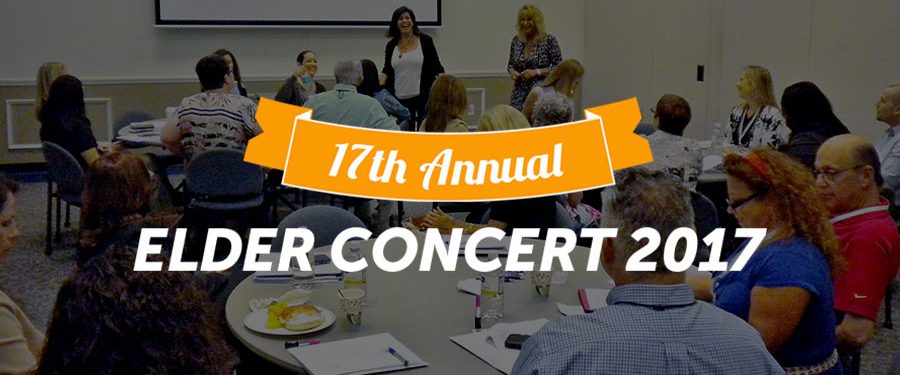
The 19th Annual Elder Concert is a one-day statewide gathering of the growing network of elder care professionals in Florida. Who Attends Elder Concert? accountants, facility administrators, attorneys, government agencies, financial planners, geriatric care managers, professional guardians, judges, social workers, and other elder care professionals and organizations.
Click here to reserve your spot.

“Elder Concert is one of the most unique educational experience I attend each year. A true knowledge share amongst professionals from many disciplines all committed to improving the service offerings we all deliver for our elderly population. We thoroughly enjoy this event each year.”
Scott Greenberg, CAEd
President
ComForcare Home Care

First, welcome to our website, and to our blog! For those of you not familiar with our practice here at Solkoff Legal, we practice, and indeed have a long history of practice, in the field of Elder Law. For many years, we confined our writing to publishing various articles, many of which are available on this website under the “our library” tab, and of course, “Florida Elder Law”, West’s Florida Practice Series, the leading textbook on Elder Law for Florida, and for the U.S.
As we delve into blogging, we want to remind our readers that the blog is not a source of legal advice. Although we hope our blog will be a good source of information, it is no substitute for a consultation with one of our Elder Law Attorneys. This first entry is a broad view of our practice areas—later entries will further define and explore the areas in which we practice, and the special consideration in each of those areas.
When I ask people what they think an Elder lawyer does, the answers range from, “I don’t know” to “estate planning for senior citizens,” to “nursing home abuse.” In fact, Elder law is a broad, interdisciplinary practice, and at Solkoff Legal, we dedicate our work to helping families—the elderly, the disabled, their caregivers, and the community in achieving peace of mind.
In fact, the distinction between traditional trusts and estates law and Elder Law is that Elder law practice focuses on a client’s lifetime needs. The Elder Law attorney creates an estate plan for post-mortem disposition of assets. However, the Elder Law estate plan is designed, first and foremost, to address an individual’s lifetime needs.
Family Asset Protection Planning for Long Term Care
Often, our clients and their families come to us in crisis, faced with the costs of assisted-living or nursing home care, and the fear of decimating their entire life savings in a matter of a few months. Other clients, concerned with a recent diagnosis or the fear of burdening their families with their care needs, come in to educate themselves, and begin taking the steps necessary to plan for their eventual increased care needs. We help these families and give them the peace of mind to live, knowing that the burden of long-term care can be shared, without spending down your life savings, and without a five-year waiting period.
Using legal and ethical planning tools that we pioneered, personalized for each family, we assist families with obtaining public benefits, including various types of Medicaid and Veterans’ benefits, to help offset the costs of long-term care. We help clients obtain government assistance for care that they can receive in their homes, in independent and assisted living facilities, and, if and when the time comes, at the best skilled nursing facilities in the state of Florida.
While we recognize that every family is different, our foundation approach remains consistent. We utilize a mix of asset protection, refined estate planning, incapacity planning, and protection against estate recovery. We handle the entire interaction with the government in the application for benefits, while providing guidance for quality of life. The firm assists its clients to plan for, but also to deal with, the non-clinical aspects of long-term care. As aging and caregiving events occur, you will be able to speak with a firm employee to get the answers you need or to obtain a Guided ReferralJ to the right source of assistance.
Estate Planning
Unlike estate planners, who do very good and valuable work, our planning seeks to achieve a care plan for families during life. Estate planning remains a vital part of our practice. Indeed, anyone over the age of 18 should, at a minimum, have a Will, a Durable Power of Attorney, and Health Care Advance Directives (a Living Will, and Health Care Surrogate Designation.) However, our estate planning is a part of what we do as lifetime planners—we help clients and their families put together and refine a plan of care, so that as their lives change, they are legally prepared in case of an emergency or an unexpected change in health.
Guardianship & Guardianship Advocacy
We help clients and their families in times of crisis. Sometimes, the possibility of planning through advance directives and powers of attorney has already escaped us and families need to take legal action right away to protect their loved ones from exploitation and financial ruin. When a person is incapacitated—unable to care for his or her own needs—their families or other concerned parties have the ability to petition the Court for the ability to act on behalf of an individual by having a Guardian appointed. A guardian is a person appointed by the court to act on behalf of an incapacitated individual’s person or property or both, under the Court’s supervision. A family member can assume this responsibility, or, the Court can appoint a professional guardian to serve.
A guardianship advocacy is different than a guardianship in that it requires an individual to have one of five categories of developmental disabilities: retardation, cerebral palsy, autism, spina bifida, or Prader-Willi syndrome that (1) manifests itself before the age of 18 and (2) constitutes a substantial handicap that can reasonably be expected to continue indefinitely. It also does not require a finding of incapacity, as a traditional guardianship requires. A guardian advocate is a person appointed by order of the Court to act on behalf of a person with such a developmental disability. Most often, a parent serves in this capacity. Parents of children with developmental disabilities should seek advice and the establishment of a guardianship advocacy so that they can continue to care for their child with a developmental disability after he or she turns 18.
Special Needs Planning
In order for disabled people to obtain certain government benefits, they must qualify financially. We utilize and individualize plans for clients and their families to plan for the long-term care of members of their families with disabilities. These benefits are irreplaceable and their value cannot be measured.
Testamentary Gifts to Individuals with Disabilities
In our estate planning practice, we come across many individuals who wish to leave assets to their children, grandchildren, and other close family and friends. When those prospective beneficiaries are receiving public benefits, the receipt of a testamentary gift can disqualify them from receiving their valuable government benefits. Thus, as Elder Law attorneys, we make provision in our estate planning documents for those receiving government benefits to receive testamentary gifts without damaging their eligibility for public benefits.
We also come across parents of children with special needs and disabilities who want to make sure that their children have lifelong access to the public benefits upon which they depend. They want to leave a legacy to their child and make sure their child is taken care of. We help families set up third party special needs trusts in order to, provide for those things that are not covered by public benefits. However, each family has different needs. We establish and refine care plans on an individualized basis for families and individuals.
Settlement Protection
When a disabled person is set to receive a settlement, without proper planning, they can be disqualified from these desperately needed government benefits. We use certain trusts that the government permits to allow the disabled person to maintain their benefits while also maximizing the settlement award for their care.
Probate & Trust Administration
When a loved-one passes away, no amount of careful planning can prepare families and loved ones for the emotional toll it takes on them. Couple that emotional time with the legal requirements a family must take to handle their loved one’s estate and final affairs, and the process can be overwhelming. At Solkoff Legal, we assist families and loved ones in handling probate and trust administrations after their loved one has passed.
Those appointed as Personal Representatives in Wills and as Trustees in Trust Agreements have special fiduciary duties. Our firm helps families navigate the legal landscape and make handling their loved one’s final wishes an orderly process. We help from the initial court filings through distribution, and advise clients as part of long-term trust administrations.
We invite you to comment and ask questions, suggest new topics for us to feature on our blog, and generally interact. To schedule a consultation with one of our attorneys, we invite you to call our office at 561-733-4242.
1. On a scale of 1-10, how would you describe your end-of-life wishes?

2. Have you done a Living Will setting forth your wishes in detail?
3. If you cannot communicate health care decisions yourself, whom would you want to speak for you?
4. Have you appointed a health care agent pursuant to state law?
5. Have you discussed your wishes with your Doctor?
6. Have you discussed your wishes, protections and the law with an Elder Law Attorney?
7. Would you want nutrition or hydration to be provided to you if you cannot eat or drink?
8. Would you want pain relief to be provided even if it might indirectly shorten your life?
9. Would you want artificial procedures to be withheld or withdrawn if there is no reasonable medical probability of recovering awareness and the ability to make decisions yourself?
10. If there is a choice, in what setting would you rather die? At home? In a hospital? Somewhere else?
Having this loving conversation can better ensure your wishes are honored if you yourself cannot communicate. Just as importantly, by talking to your loved ones while you are able, you give the gift of knowledge which can greatly relieve your loved ones of guilt and indecision.
This document is authored by Scott Solkoff, a certified specialist in the field of Elder Law. Solkoff Legal, P.A., is a Delray Beach, Florida law firm exclusively representing the elderly, people with disabilities, their caregivers and their loved ones. Finding an Elder Law Attorney in your state will better ensure your wishes are honored and that your agents are protected against unnecessary liability. For articles and more information, visit www.solkoff.com.
From a report released today from The Georgetown University Center for Children and Families along with the Community Foundation of Sarasota County and the Sarasota Herald Tribune:
• More than 80 percent of the pediatricians surveyed experienced cases in which insurance plan limits, or requirements for authorizations for needed treatments, such as prescription drugs, had prevented them from providing children with needed care.
• More than two-thirds of those surveyed said they saw an increase in the number of children being reassigned to other Medicaid plans or physicians without their parents’ consent.
• About 59 percent of responding pediatricians said families had a hard time finding specialists that would accept Medicaid. Referrals to behavioral or mental health professionals were the most difficult to fill.